What is Smile Design?
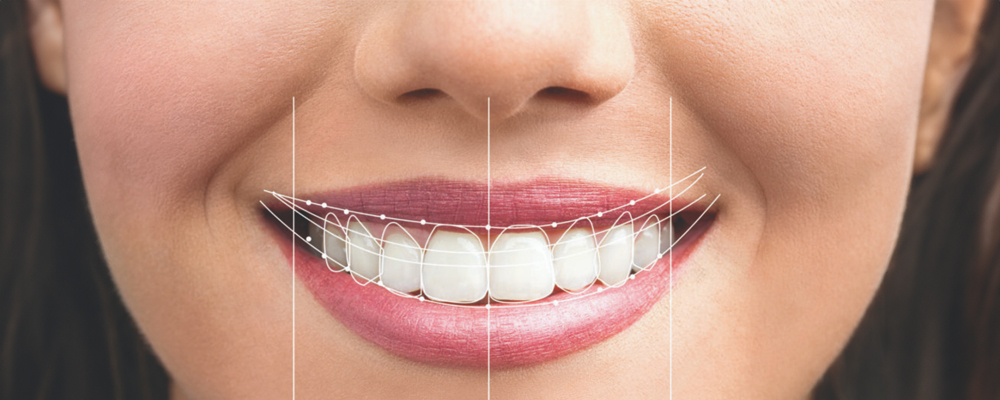
Smile design is the planning and pre-visualization of a functional and aesthetic dental treatment in accordance with the personal needs of the patient in order to eliminate the existing problems in the mouth and gain an aesthetic appearance, taking into account factors such as face, lips, smile, speech, harmony of teeth and gums with each other, functionality and aesthetics. Although the term “smile design” is known as dental treatments for aesthetic purposes, in fact, smile design is the design and simulation process before the treatment is started.
Smile Design Concepts
We can divide smile design procedures into 2;
- These are designs made with wax up and mock up works and applied on the patient’s teeth personally.
- These are the designs realized with simulations made with digital smile design programs that can be used as a special program as well as with power point and keynote on the computer.
How to design a smile with wax-up and mock-up?
First of all, a plaster working model is obtained by taking measurements from inside the mouth. The tooth (e.g. lamina) planned to be made with special waxes on this model is prepared in the desired form in communication with the patient. The impression is taken on the model with silicone impression or transparent silicone. Temporary crown material is added into the resulting silicone key, from which we can obtain artificial teeth (if transparent silicone is used, the process is continued with flowable composite because it is more aesthetic) and applied on the teeth. After waiting for it to harden, it is removed and the restoration planned to be made on the teeth is transferred. The patient immediately sees the restoration planned to be made one-to-one and after obtaining his/her approval, the actual preparation procedures are started.
How is digital smile design done?
Digital smile design processes start with photo shoots. Basically, the process is started by taking 2 photographs showing the occlusal surfaces of the teeth during the frontal smile and 2 photographs with retractors, 1 photograph showing the occlusal surfaces of the teeth and 1 photograph at the 12 o’clock position to show the curvature of the anterior teeth in the anterior-posterior direction.
The necessary designs are made by transferring the photos to power point, keynot or a special smile design program and the patient is shown what kind of teeth they can have instantly. The appropriate tooth form is determined and designed together with the patient.
What are digital smile design programs?
Smile Designer Pro and Dsd App, which are 2-dimensional, are examples of digital smile design programs. While Smile Designer Pro works on every platform (Windows, Mac), Dsd App only works on ipad. In 3D, nemo, exocad, 3shape programs can be given as examples.
With Smile Designer Pro, smile design is done as follows:
The program is opened and the patient information is recorded on the screen that appears and the photographs required for the design are uploaded to the system. Then the midline occlusal plane and the planes passing through the pupils and lip contour are determined. Depending on the patient’s gender, age and request, one of the tooth forms loaded into the system is selected, a simulation is created by making the necessary size adjustments and presented to the patient’s liking, the necessary arrangements are made and the design is completed.
The Place of Periodontal Treatments in Smile Design
The basis of smile design is undoubtedly healthy and aesthetic gums. For an aesthetic design, the process is started by first evaluating the gum health.
If the individual has pigmented gums, the gums can be treated with laser or traditional methods to change their diet to a rosy pink color.
If there is gingivitis, i.e. gum disease, tooth surface cleaning and polishing is performed and more importantly, effective oral care techniques are taught.
If gum disease has progressed to the bone and periodontitis has occurred; various surgical procedures are performed to regain gum and bone health.
Another factor to be considered in smile design is the gingival level. An ideal gingiva appears about 0.5 -1 mm during a smile. If the gums appear more than the specified amount during the smile, this is called a gummy smile. Depending on the severity of the case, gingival leveling, bone leveling and sometimes advanced surgical procedures may be required.
If this gingival smile is caused by the lack of volume of the lips, lip filling is performed.
If the cause is excessive mobility of the lips, excessive movements of the lips can be prevented with botox application. If the upper lip is positioned upwards, this causes a gingival smile and the treatment is done by positioning the lips downwards (lip repositioning).